
Effective Management of Accounts Payable for Businesses
Accounts payable management is vital in ensuring financial stability, enhanced cash flow, and establishing good relations with suppliers. Every business, no matter how big or small or in any industry, has to take care of its pending invoices and payments to run the day-to-day operations. An effective accounts payable system can assist companies to avoid late payment charges, minimize administrative expenses, prevent fraud, and keep proper financial records.
As businesses grow, managing invoices and payments manually can become time-consuming and error-prone. The process can be made more efficient with the implementation of clear procedures, accounting software, and tracking payment schedules. The businesses can enhance financial control and make more appropriate decisions regarding their working capital by implementing the correct accounts payable management strategies.
Understand the Accounts Payable Process
Accounts payable (AP) is the amount of money a business owes to its suppliers, vendors and service providers who have provided goods or services to the business but the money has not been paid yet. These obligations are recorded as a current liability on the balance sheet of the company since they usually have to be paid off in the short term.
The process of accounts payable usually starts when a business is invoiced. The invoice is checked, compared with purchase orders and delivery records, and approved by the relevant individual and is then scheduled to be paid. After the payment has been made, the accounting system records the transaction.
Knowledge of every step in this process helps companies to identify how to spot delays, minimize errors and maintain better control over their financial commitments. Well defined responsibilities also make invoices processed and payments made on time.
Establish a Clear Invoice Management System
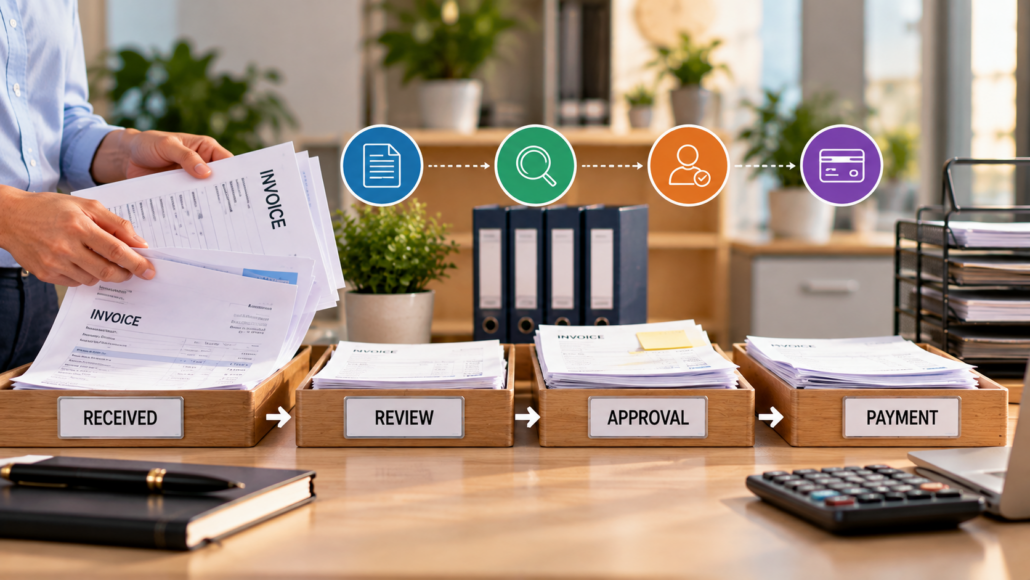
Efficient invoice management is the foundation of effective accounts payable operations. When invoices are scattered across emails, paper documents, and different departments, businesses may struggle to monitor the payment dates and confirm the transactions.
To prevent such issues, companies should have a centralized system to receive, record, review and store invoices. All invoices must contain the necessary details, including the name of the vendor, invoice number, invoice date, terms of payment, amount due, and description of goods or services delivered.
A standardized approval workflow can further improve efficiency. For example, the purchasing department can check the order, the receiving team can check delivery and the finance department can check the invoice and then payment can be made.
Use Automation and Accounting Software
Manual accounts payable procedures often involve repetitive data entry, time-consuming approval procedure, and increased chances of human error. Automation of accounts payable can assist businesses to address these issues by automating routine operations and enhancing transparency in payment operations.
There are a number of significant advantages of automation. It minimizes paperwork, accelerates invoice processing, enhances the accuracy of records, and enables finance departments to work on more productive tasks, including cash flow forecasting and financial analysis.
However, the choice of the appropriate software should be taken into consideration. Some of the aspects that businesses should consider include integration with current accounting systems, data security, reporting, scalability, and cost. Simple cloud-based accounting tools might be useful to smaller businesses, whereas larger organizations might need more sophisticated accounts payable tools.
Optimize Payment Scheduling and Cash Flow
Good accounts payable management involves the ability of a business to balance between paying on time and ensuring that it has adequate working capital. Immediate payment of all invoices can decrease the cash available, whereas late payments after agreed terms can ruin the relationships with suppliers and result in fines.
Companies are advised to develop a payment schedule that comprises invoice due dates, payment terms, cash available, and financial obligations. Considering this schedule on a regular basis assists finance teams to prioritize payments and prevent unwanted cash crunches.
Early payment discounts should also be utilized by the companies when the savings are worth paying earlier. For example, a supplier who is willing to give a discount on payment within 10 days can offer a chance to save on purchasing expenses. The business must however ensure that early payment will not cause cash flow problems beforehand.
A disciplined payment strategy helps businesses preserve liquidity, manage expenses, and make informed financial decisions.
Strengthen Internal Controls and Prevent Fraud
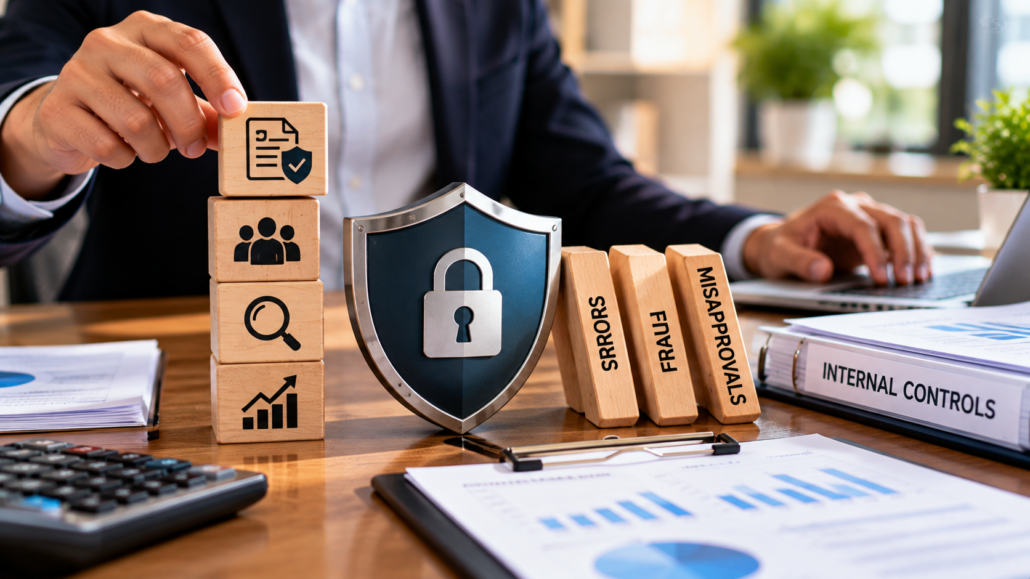
Accounts payable departments deal with sensitive financial data and make payments to third parties. In the absence of proper controls, companies can encounter multiple payments, unauthorized transactions, invoice manipulation, and vendor fraud.
The separation of responsibilities among employees is one of the effective ways. As an illustration, the individual who enters a record of a vendor should not be the only one to approve invoices and release payments. Such division of responsibilities minimizes the chances of mistakes and fraud.
Businesses should also verify the information of the vendors before making payments, particularly when there are changes in the bank account details or payment instructions. Payment diversion scams can be prevented with confirmation by a trusted, independently verified contact method.
Training employees on typical fraud warning signs should be provided, such as unexpected payment requests, suspicious email addresses, and urgent requests to alter banking information.
Build Strong Supplier Relationships
Suppliers are significant in business activities and good payment habits can be used to sustain healthy long-term relationships. The delay of payments, ambiguous communication, and unresolved invoice issues may undermine the trust and even disrupt the delivery of necessary goods and services.
Businesses are advised to have an open communication with the vendors on payment terms, invoice requirements and the expected payment dates. In case a delay in payment is inevitable, it can be beneficial to notify the supplier in advance and give a realistic schedule to avoid misunderstandings.
It is also important to resolve invoice discrepancies promptly. Before payment is approved, differences in prices, quantities, calculation of taxes or purchase order details should be inquired. An effective dispute resolution mechanism can be used to ensure that minor problems are not turned into prolonged conflicts.
Monitor Performance and Continuously Improve
Periodic performance reviews can assist companies in evaluating the effectiveness of their accounts payable processes. In the absence of quantifiable metrics, inefficiencies may be hard to detect, recurring issues may be hard to comprehend, and the advantages of automation may be hard to assess.
Some of the key performance indicators (KPIs) that businesses should monitor include the average time to process invoices, the proportion of invoices paid on time, the number of duplicates, the cost per invoice, and the number of outstanding disputes.

